Why Contra Still Feels Harder Than Elden Ring
In April 2026 a post appeared on r/IndianGaming titled "Why does Contra feel hard like Elden Ring now." The body ran to four lines:
When I played first time in 97, Game wasnt that hard till Hangar level. Now I struggle even to complete first jungle level. Modern games have lowered skill level. That older games which felt easy, now feels to hard to play.
He added that he was playing on Steam with a wireless GameSir Cyclone 2 pad.
Most of the argument in that thread would end up being about his last sentence — whether modern games actually made players softer. But the more useful sentence is earlier. In 1997 he reached the hangar without much trouble. Today he cannot clear the jungle. Hangar is stage seven of eight. The jungle is stage one.
That is not a small gap, and "modern games made me worse" only explains part of it.
Which Contra he played in 1997
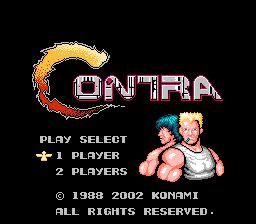
Konami put Contra into arcades on 20 February 1987. The port everyone actually means when they say "Contra" arrived a year later: 2 February 1988 in North America, 9 February for the Famicom.
By 1997 the arcade window had closed almost everywhere. What was in circulation was the cartridge, which matters, because the cartridge is not the easier version.
The home version is the harder one
Every Contra gives you three lives, and one hit from anything removes one of them. From there the two versions start to diverge, and none of the divergences favour the console player.
In the arcade, dying puts you back roughly where you fell. On the NES version, continuing drops you at the start of the current stage — and the NES stages were reorganised to be longer than their arcade counterparts. Where arcade Contra ran its final stretch as one continuous gauntlet, the NES splits it into four stages (snowfield, energy zone, hangar, alien's lair), each ending with its own boss. Get sent back on any of them and you replay more ground than you would have on the cabinet.
The first stage got meaner too. Both versions open on a jungle, but the NES version extends it and adds bottomless pits before the gate that aren't in the arcade at all. Add sprite flicker when too many things share the screen, enemies blending into simpler backgrounds, and hazards with no telegraph, and you have a port that reviewed as the harsher of the two.
Two things soften it, and both are famous. The Japanese release ran on Konami's own VRC2 memory controller rather than the cheaper board used internationally, which bought it a prologue cutscene, an archipelago map before every stage, a sound test, and a stage-select cheat — the international cart got none of that. And then there's the code.
Up, Up, Down, Down, Left, Right, Left, Right, B, A, Start. Thirty lives instead of three. Kazuhisa Hashimoto built it as a debug shortcut while porting Gradius in 1986 and left it in; Contra turned it into the most recognisable cheat in the medium. It is arguably the only reason most people ever saw stage eight.
Difficulty as revenue
Put the 1987 machine back in the room and every one of those choices reads differently.
Three lives, one-hit kills, limited continues even if you keep feeding it coins, and a timer on some stages. None of that was a statement about challenge. It was how the cabinet got paid. Contra ranked sixth in RePlay's popularity charts by July 1987, which is another way of saying it earned well. The design goal was not "the player triumphs"; it was "the player eventually loses, having spent more than they planned."
Everything above is why Contra leans so hard on information you don't have yet. You can't react your way through a first run. You die, you learn where the soldier spawns, you run it again. That is a legitimate kind of difficulty — it builds memory — but it was built for the coin slot, not for you.
What Elden Ring does with death
Elden Ring shipped in February 2022, took Game of the Year at The Game Awards, and passed 20 million copies inside twelve months. It is frequently described as punishing. The comparison to Contra collapses the moment you look at what a death actually costs.
Miyazaki told The New Yorker in 2022: "We are always looking to improve, but, in our games specifically, hardship is what gives meaning to the experience. So it's not something we're willing to abandon at the moment. It's our identity." He also called Elden Ring a compromise — a way "for people to feel like victory is an attainable feat": summonable spirits, a horse you can flee on, and an open world where a road that's too hard just means taking another one.
Put beside his PlayStation Blog version of the same idea — "We don't want players to feel like the game is unfairly punishing, but rather that there's a chance to win a difficult encounter and make progress" — and the rule becomes explicit. Death has to teach something legible.
Strip it down and the split is obvious. In Elden Ring death costs position and currency you can usually recover; the Grace is close, the boss didn't heal, and you kept what you learned. In Contra death costs a life, costs the stage even when you continue, and takes your weapon. One assumes you will eventually win. The other assumed it would be getting your coins either way.
Neither is morally better. They just aim at different outcomes.
Why it lands harder in 2026
Three things have changed around him, and only one of them is his own decline.
The recovery tools vanished. Save-anywhere, generous checkpoints, difficulty menus, accessibility toggles, hints in every modern UI. Twenty years of those and their absence reads as hostility. The Steam collection he's playing — Konami's Contra Anniversary Collection, from 11 June 2019 — offers exactly one concession: save anytime. No rewind, unlike plenty of retro compilations.
The input chain got longer. He's on a wireless pad. The Cyclone 2 does hit a genuine 1000Hz over its dongle or a USB-C cable, but Bluetooth adds latency on top of whatever the display adds. In 1997 the path was a wire into a CRT with effectively no delay. An extra frame doesn't sound like much until you're trying to repeat a jump you once made on reflex.
Muscle memory is specific. What got him to the hangar was that exact controller, that exact delay budget, and a lot of repetition in one summer. Remove two of those and add twenty-nine years.
None of this means modern consoles softened him. It means the modern game quietly hands you the scaffolding Contra never had.
Getting through the jungle again
Short version, in the order it matters:
- Enter the code. Up, Up, Down, Down, Left, Right, Left, Right, B, A, Start. Thirty lives, still in effect when you burn a continue. This is where most people actually start.
- Take Spread, then refuse upgrades. The red S pod is the best crowd-clearer and boss damage in the game. Any later pod overwrites it, so high-level play means deliberately not picking them up.
- Kill the red sensors first. The rotating pillboxes in the jungle and the panels in the base stages spawn soldiers forever. One shot each.
- Stay low in the base stages. They auto-scroll and enemies spawn ahead of the camera; the bottom of the screen buys reaction time.
- Learn, don't rush. Most spawns are tied to fixed scroll positions. Prefiring where the soldier will appear beats reacting to him.
The other reason it's worth relearning: the series kept its teeth as the hardware improved. Super Contra pushed the template further on the same 8-bit hardware, Europe got a robot-swapped version called Probotector to get past German censorship rules, and the idea eventually landed on Game Boy Advance with the aiming still intact.
There is no shame in needing thirty lives. The game shipped knowing you would.
If you want to see how the whole lineage stacks up — the original through its sequels and regional oddities — the full Contra series collection is here.