Play Super Mario World (Europe)
Game Introduction
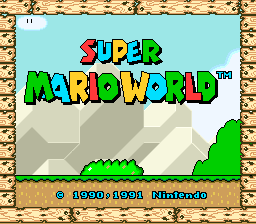
Super Mario World is a side-scrolling action game launched by Nintendo in 1990 for the Super Nintendo (Super Famicom) platform, and was one of the system’s launch titles. As the fifth entry in the Super Mario series, it has sold over 20 million copies worldwide and is hailed as one of the greatest games of all time. The game retains the series’ classic gameplay while introducing many new elements. The most notable addition is the new character Yoshi, a green dinosaur that serves as a mount for Mario and Luigi. Yoshi can eat enemies, spit out Koopa shells, and gain different abilities based on the color of the shell he swallows. His addition brings new action and strategic elements to the game, making him a fan favorite. In terms of level design, the game features 9 major worlds and over 70 levels, covering diverse environments like forests, caves, mountains, and castles. Many levels have secret exits and hidden content, encouraging players to explore thoroughly. The Special Zone, accessible only via the secret Star Road, has the hardest levels in the game, offering a challenge for hardcore players. For its music, Koji Kondo composed classic melodies for the game, which were remixed and enhanced using the Super Nintendo’s improved audio technology, making the soundtrack richer and more pleasant to listen to. Super Mario World was not only a huge success in gameplay and innovation, but also had a profound impact on subsequent Mario series titles. Its excellent level design, engaging gameplay, and classic music have secured its status as a timeless classic in gaming history.
Gameplay
Game Overview
Developed by Nintendo EAD and directed by Takashi Tezuka and Shigeru Miyamoto, Super Mario World shipped with the Super Famicom in Japan on November 21, 1990 and reached Europe in April 1992. Mario and Luigi chase Bowser and the seven Koopalings across Dinosaur Land to free Princess Peach. With more than 20 million copies sold, it is the best-selling game on the console.
Core Gameplay
The handling builds on Super Mario Bros. 3 and adds the spin jump, which crushes enemies and bounces harmlessly off spikes. A reserve box at the top of the screen holds a second power-up until you call it down. The Cape Feather lets Mario build speed, glide and stay airborne for long stretches, while Yoshi swallows enemies and turns Koopa shells into tools: blue grants flight, yellow produces a ground shockwave, red spits fireballs, and a flashing shell grants all three at once.
Hidden Exits and Secrets
Nine worlds contain 72 courses but 96 exits, because many stages hide a keyhole and a second goal that reroutes the world map entirely. Collecting the Star Road shortcuts unlocks the Special Zone, eight punishing stages aimed at players who have already cleared everything else, and finishing them permanently swaps the sprites used by ordinary enemies.
Game Tips
- Yoshi debuts here: swallowing a blue, yellow or red Koopa shell grants flight, a ground shockwave or fireballs, and a flashing shell grants all three abilities at once
- Cape Feather: build up speed to glide into sustained flight, then dive to knock out a row of enemies
- Reserve item box: a slot at the top of the screen stashes one power-up for an emergency
- Spin jump: crushes enemies that resist a normal stomp and bounces safely off spikes
- 96 exits across 72 courses: keyholes and secret goals let you skip whole stretches of the world map
- Star Road and the Special Zone: eight hidden expert stages, after which ordinary enemy sprites are permanently swapped
- Score by Koji Kondo, reworked for the Super Nintendo's eight-channel audio hardware
Frequently Asked Questions
A straight run to Bowser takes about five hours. Finding all 96 exits and clearing the Special Zone pushes it to roughly nine or ten hours.
No. Yoshi stays in the stage where you found him and is left behind at the goalpost, so each level with an egg means hatching him again.
The cartridge has a battery-backed save. Progress is written automatically after every cleared stage, including ghost houses and switch palaces, and you resume from the world map.
It adds Yoshi, the cape, the spin jump and the reserve item box, and the world map gains branching routes and secret exits instead of a strictly linear path.
Nothing. The game uses no special co-processor, so any mainstream emulator runs it fully, and save states make practising the Special Zone much easier.