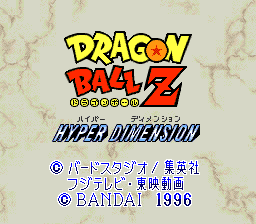
Play Dragon Ball Z: Hyper Dimension (SNES) - 16-Bit Fighting Classic (Simplified Chinese v0.6)
Game Introduction
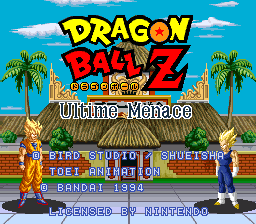
Dragon Ball Z: Hyper Dimension is widely regarded as the most visually impressive DBZ game on the Super Famicom. Released by Bandai in 1996, it features large, beautifully animated sprites and a sophisticated fighting system that includes mid-air combat and 'Desperation Moves' when health is low. The roster includes 10 characters from the Frieza to Buu sagas. This title abandoned the split-screen mechanic of the Butoden series in favor of a more traditional, fluid fighting engine. This Simplified Chinese v0.6 patch provides a translated interface for this high-tier competitive fighter.
Gameplay
Game Overview
Dragon Ball Z: Hyper Dimension, released by Bandai in 1996 near the end of the SNES lifecycle, is widely seen as the best-looking and most hardcore DBZ fighter of the 16-bit era. This Simplified Chinese test build (v0.6) includes ten fighters from the Frieza to Buu arcs, rendered with large, beautifully animated sprites and a dimensional arena. It is an underrated gem that fighting fans should not miss, combining spectacle with surprising mechanical depth. The sprite work remains stunning even by modern standards.
Core Gameplay
It is a traditional one-on-one fighter: characters move on a plane, chain close-range combos, and fire energy blasts, able to knock opponents into the background or launch them airborne for multi-plane battles. It abandons the split-screen mechanic of the Butoden series for a smoother single-screen engine. Commands are complex and demand practice, but the fidelity is high and the beam-clash spectacle feels just like the anime, earning knowing smiles from veterans. Each fighter plays distinctly, encouraging mastery of the whole roster.
The Hardcore Life-Ki System
Its boldest feature is the lack of a health bar: Life and Ki are one gauge—firing blasts and flying drain life, while charging restores it, fusing offense and defense into constant risk. At low health a "Desperation Move" can flip the match. Supers like the Spirit Sword, Galactic Doughnut, and Death Beam have tricky inputs yet feel great, giving the game enough depth for serious competitive play worth studying. Its risk-reward economy makes every exchange a genuine decision.
Game Tips
- Ten playable fighters spanning the Frieza to Buu arcs of Dragon Ball Z
- Life and Ki merged: firing blasts and flying drain HP while charging restores it
- Desperation Move: low health triggers a comeback super for dramatic turnarounds
- Dimensional arena: knock foes into the background or air for multi-plane combat
- Single-screen engine abandons the Butoden split-screen for fluid fights
- Faithful supers like the Spirit Sword, Galactic Doughnut, and Death Beam
- Simplified Chinese v0.6 with translated story mode and interface
Frequently Asked Questions
Fighting games rarely save stories; this one keeps match records and settings. The v0.6 Chinese build supports basic memory so practice and settings persist, but no RPG-style save.
One round lasts about 1 to 3 minutes, and a best-of-three is quicker; mastering inputs and the Life-Ki system needs long practice, with deep competitive play.
It drops the Butoden split-screen for a fluid single-screen engine and a barless Life-Ki system, with hardercore visuals and mechanics, the top 16-bit DBZ fighter.
Inputs are complex and the system is hardcore, so practice helps; but the anime-faithful presentation is snappy, and fans will love it, though pure novices need adapting.
No. Characters come from the Frieza to Buu arcs, but the game is battle-focused with minimal story, so you can jump into fights without knowing the anime.