Tunic's Secrets Come From a NES Manual: What Andrew Shouldice Learned From Zelda II
A thread on r/Games pointed back to a Rock Paper Shotgun interview that explains something players had been guessing at since Tunic came out. Talking to creator Andrew Shouldice at GDC, the question was why a game about a small fox in a ruined world feels so much like a NES cartridge you never actually played.
The answer is that it sort of is one. Shouldice didn't port a NES game. He rebuilt the feeling of holding only a manual and no context — and he did it deliberately, after throwing out the design tools he'd spent years relying on.
He Started With Graphs, Then Threw Them Out
Before Tunic, Shouldice made hidden object games. The structural logic behind them was something he'd been doing since childhood without knowing its name: drawing dependency graphs on graph paper for point-and-click adventures he designed entirely in his head. In computer science classes he learned those had a proper name — directed acyclic graphs, DAGs, with strict lines of cause and effect.
He started Tunic the same way. "You need sword to chop down bush, you need key to open door." And then he stopped. "I realised, 'No, I want exceptions at every step of the way.'"
Hard progression gates were out. "I wanted there to be a way to get something early that lets you get past these bushes without even picking up the sword. I want this door to be something that you can actually circumvent if you want — and so that formal structure needed to turn into a much, much mushier soup."
A few habits from the hidden object days did survive: pacing, drawing the eye, pulling the player in a direction. "Even though you don't technically need to get the sword, we still want you to get the sword first."
A Secret Has Three Phases
His cleanest idea is that learning anything in a game happens in stages. "You start not knowing the thing. That's the ignorance phase. Then there's knowledge, where you know something exists but you don't understand it. And then eventually you do understand it. Understanding is closure."
The middle one is the one he designs for — the part where you're holding "the bits of a jigsaw and you want to fit them together." It's also the part most games rush you through. Tunic's fixed isometric camera, its unreadable constructed language and its scattered manual pages all exist to keep you there as long as possible.
He calls the target feeling "the excitement of not knowing, or rather, of knowing there's lots to know, but not knowing it yet, and knowing you could know but nobody's expecting you to know."
The Manual Was Always the Point
Here's where the NES comes in. Shouldice's earliest Zelda memory isn't of playing. It's of reading. "I was doing that thing that I did a lot when I was a kid, which was looking through the instruction manual while someone else was playing it, and letting that thing happen where your imagination takes over."
He also checked out library books with titles like How To Win At Nintendo Games — "paperback walls of text, prose with no illustrations" — about games he would never see, let alone play. "I feel like that was maybe an important moment cognitively... they're clearly real, someone wrote a book about them, they exist, but not having the limitations of actual 8-bit hardware impinging on my childhood imagination."
That is Tunic's central mechanic, stated plainly: you find pages of an in-game manual, and the manual is how you learn what the game even is. The Legend of Zelda shipped in 1986 with exactly that bargain — a cartridge, a booklet, and no waypoints.
Zelda II's Manual, Drawn Again
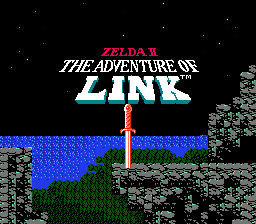
The homage isn't just atmospheric. A lot of Tunic's manual illustrations are direct callbacks to artwork from the real-life manual for Zelda II: The Adventure of Link — the 1987 sequel that traded the top-down overworld for side-scrolling towns and dungeons, and shipped with one of the most heavily illustrated booklets in the series.
Tunic itself released on March 16, 2022 for PC and Xbox, published by Finji, after seven years of development that began as a solo project in 2015. It took Artistic Achievement and Debut Game at the 19th British Academy Games Awards, and Outstanding Achievement for an Independent Game at the 26th D.I.C.E. Awards.
The Wonder Gets Used Up — But You Can Still Chase It
Shouldice still plays the old games. He'd been working through the Second Quest of the original Zelda — the remixed, considerably meaner second loop — and calls it "a wild thing that's full of some truly mean design decisions."
He's more careful about the vanilla original. "Not the game itself... because it's long since been emptied of a lot of its wonder. But it's still fun to think about and try and capture that." Which is a fair description of what the series has been doing ever since: rebuilding a wonder that the first cartridge already spent.
He Refused to Play Outer Wilds
One of the more honest admissions in the interview is that Shouldice avoided a game everyone told him was exactly his thing. "I didn't play Outer Wilds during development, because everybody told me that it was exactly my jam. And I knew if I played it, I would just curl up into a little ball and disappear forever. So I saved it."
What he envies is its bookkeeping. Tunic leaves you holding every loose thread in your head, and he concedes that some way of marking up the manual — stickers, notes — "would have been neat." The risk, in his words: "if you lose the thread, you've lost the thread."
Content for No One
The part that sounds wasteful is the part he defends hardest. Shouldice is comfortable being "arbitrarily complicated," including building things almost nobody will ever find. "That means you have secrets that we can feel as players, whether it's glimpses of them that we get first-hand, or we hear hushed community chatter about something. Those secrets will exist and sort of subtly radiate this feeling of mystery out into the rest of the game."
His stated fantasy is to play Zelda I and find a mechanic nobody knew was there, "despite having been completely decompiled."
If You Want That Feeling, Start With the Originals
You can chase the same thing Shouldice did, minus the seven years. The NES original and its sequel both run in a browser, manual optional — and A Link to the Past is where the series worked out how to hide things without a booklet at all.