Double Dragon on NES: The Port That Cut Co-Op and Still Became a Classic
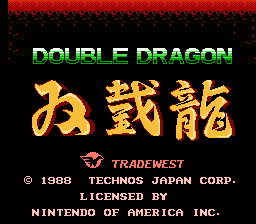
Every month, the r/retrogameofthemonth community picks a classic to replay together, and their latest Retro Rhythm pick is Double Dragon on the NES. The thread reads like a love letter: the controls, the graphics, and above all a soundtrack the original poster calls "absolutely amazing," praising the way it builds as you fight deeper into Black Warriors territory. Then comes the question at the end: is Double Dragon your favorite arcade-to-NES port?
That's a loaded question, because Double Dragon on NES is a strange beast. As a conversion of the 1987 arcade hit, it breaks almost every rule. As an NES game in its own right, it's one of the console's defining brawlers. Nearly forty years later, the tension between those two facts is exactly what makes it worth revisiting.
The Arcade Original Set the Rules
Double Dragon hit arcades in 1987, built by Technōs Japan under director Yoshihisa Kishimoto. It was a spiritual successor to Renegade (Nekketsu Kōha Kunio-kun in Japan), filtered through Kishimoto's love of Bruce Lee films — Enter the Dragon in particular — and a post-apocalyptic street-gang setting inspired by Fist of the North Star.
The arcade game established the genre's vocabulary. Twin brothers Billy and Jimmy Lee, masters of the fictional Sōsetsuken style, fight through four stages to rescue Marian from the Black Warriors and their leader Willy. It popularized simultaneous two-player co-op — and the gleefully cruel twist where the two brothers had to fight each other for Marian's affection after the final boss. It let you rip weapons out of enemy hands and use them. Beat 'em ups would spend a decade refining what Double Dragon sketched out.
So when Technōs brought the game to Nintendo's home console in 1988 — published by Tradewest in North America and Nintendo in Europe — expectations were enormous. And the very first thing players noticed was what was missing.
What the NES Version Cut — and Why
The headline omission: simultaneous co-op, the feature that made the arcade game a phenomenon. On the NES, the main mode ("Mode A") makes two players take turns, and both of them control Billy.
The story got rewritten around that limitation. Jimmy Lee, the player-two character in the arcade, became the secret leader of the Black Warriors — beat Willy and your own brother steps out of the shadows as the true final boss. It was an infamous twist, born from a technical compromise.
The compromises went deeper. The NES version can only put two enemies on screen at once, and they're always identical pairs. Weapons vanish the moment a wave of enemies is cleared. The game is riddled with small bugs and glitches. By most accounts, this happened because Double Dragon was only Technōs' second NES project — the team simply didn't know the hardware well enough yet to squeeze co-op out of it.
What Technōs Added Instead
Here's where the port gets interesting. Rather than a straight conversion, Technōs rebuilt Double Dragon around the NES's limits — and accidentally prototyped ideas the genre would later adopt.
An experience system. Billy starts with basic punches and kicks. Defeating enemies earns experience, and crossing thresholds unlocks new techniques — spin kicks, uppercuts, and more — across seven levels. Your character literally grows stronger over the course of a single playthrough, an idea almost unheard of in 1988 brawlers.
Redesigned stages. Mission 3's cavern section adds platforming, pits, and traps that never existed in the arcade. Whether you enjoy precision jumping in a brawler is another question, but it made the NES version its own game rather than a shrunken copy.
A new enemy. Chin Taimei — shortened to "Chintai" in the localization — a martial arts master who debuts as the Mission 2 boss and keeps returning as a regular foe.
Mode B. The most forward-thinking addition: a one-on-one versus mode with noticeably larger sprites, where you can play as Billy or five of the game's enemy characters — Williams, Roper, Linda, Chin, or Abobo — against a friend or the CPU. In 1988, four years before Street Fighter II, a console brawler shipped with a built-in fighting game. Mode B is primitive, but you can see the future in it.
The Soundtrack Deserves the Hype
The Reddit thread singles out the music, and honestly, it's right. Composer Kazunaka Yamane's score carries over from the arcade with arrangements that push the NES sound chip hard — the title theme, the Mission 1 groove, the way tracks escalate as you progress. The original poster's favorite detail, the high note at the end of the title theme, is the kind of flourish that burned itself into a generation's memory. Plenty of NES brawlers had better hit detection. Very few sounded this confident.
The Sequels Fixed the Mistakes
Technōs learned fast. Double Dragon II: The Revenge arrived on NES in late 1989 (published by Acclaim in the West) with everything fans demanded: simultaneous co-op restored, nine stages instead of four, and a beefed-up moveset including the hurricane kick and hyper uppercut. For many players, DD2 is the definitive NES entry.
Double Dragon III: The Sacred Stones followed in 1991 with a globetrotting plot and playable new characters — though its brutal difficulty made it the most divisive of the trilogy. And in 2003, Double Dragon Advance brought the series to the Game Boy Advance as a loving remake that reconciled both versions: arcade DNA with the NES game's additions folded back in.
Verdict: A Bad Port, A Great Game
So, back to the Reddit question. Is Double Dragon the best arcade port on NES? Technically, not even close — the Master System version kept co-op and stayed closer to the arcade's layout. But judged on its own terms, the NES Double Dragon is something rarer: a compromised conversion that invented its own identity. The leveling system, Jimmy's betrayal, Mode B, that soundtrack — none of it exists in the arcade original, and all of it is why people are still picking it as game of the month decades later.
And if you want the strangest chapter in the Lee brothers' NES career, team them up with some very rude toads in Battletoads & Double Dragon. Yes, it's real. Yes, it's as chaotic as it sounds.