Super Dodge Ball: The NES Sports Game That Got Controls Right
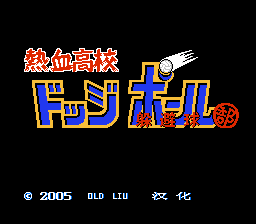
In December 2014, someone on r/gaming posted a screenshot under the title "One of the best forgotten NES games, control-wise." Ten upvotes. No essay attached, no argument — just a picture and a claim about how the game feels.
The thread filled up anyway, and it kept filling for two days. People who hadn't thought about the game in twenty years turned out to remember exactly where they played it: an arcade cabinet in a bad movie theatre, a pizza parlour, a friend's NES that got dusted off specifically for it. One commenter mentioned keeping an emulator hooked to a tube TV for about a decade just to have it available.
The game was Super Dodge Ball, and the reason a ten-upvote post still pulls that kind of response is that "control-wise" was the right thing to praise. Technōs Japan built something unusually precise in 1989, and almost nobody noticed.
From Arcade Cabinet to Famicom
Super Dodge Ball started as a 1987 arcade game from Technōs Japan, published in North America by Leland Corporation. It was the second entry in the Kunio-kun series, the line that began with Nekketsu Kōha Kunio-kun — better known outside Japan as Renegade — and would later reach Western audiences as River City Ransom.
The home version came in two steps. Japan got Nekketsu Kōkō Dodgeball Bu on Famicom on 26 July 1988. North America got Super Dodge Ball in June 1989, published by CSG Imagesoft, with Mitsuhiro Yoshida directing, Koji Ogata designing and Kazuo Sawa composing.
It isn't a port in any strict sense, which is where the interesting part starts.
What the NES Version Changed
The arcade original gave you a team of seven and a two-button scheme whose meaning flipped depending on whether you were holding the ball. The NES version rebuilt the whole thing around individual players.
Every team member got a name and a stat line. Sam Powers leads Team USA, backed by John Stone, Mike Knopfler, Randy Sting, Bill Flash and Steve Sato — and those stats aren't cosmetic. They change how hard a character throws, how much punishment he takes, and how he behaves when he's in trouble. Two new national teams were added to the roster, India and the USSR. And the soundtrack was rewritten per country, with the Japan stage built on "Sakura Sakura" and the England stage doing something suspicious with two Beatles tunes.
Three modes came out of that expansion: World Cup play, a two-player Versus mode, and Bean Ball — a free-for-all where the six members of Team USA fight each other on a schoolyard, with the background shifting from day to evening to night as you raise the difficulty.
The Feel: Two Throws and a Tired State
Here's the part the 2014 thread was actually about.
The objective is simple — hit opposing players with the ball until their life gauge empties, at which point they're eliminated and a small angel floats up off the court. Three of your players are in the infield, three work the sidelines, and you lose if your three infield members go down.
The nuance is in the throwing. Each character has two power shots: one charged while running, and a different one released during a running jump. The jump throw is the one players remember. It's faster, it hits harder, and because you're committed to an arc the moment you leave the ground, using it well is a read of where someone is going to be rather than where they are.
Then there's the tired state. Drop a character to three bars or fewer on the life gauge and he's visibly winded, which hands the opponent a window. It's a small rule that does a lot of work: it turns a health bar into a pressure mechanic, and it means a losing player can still make a good decision instead of waiting to die.
Courts That Change the Match
Every national team has a home court, and two of them break the rules.
Iceland's is a sheet of ice, so your movement keeps sliding after you let go of the d-pad. Kenya's is swampland, where running is a slog. Both force you to throw differently — the timing you learned against England doesn't carry over, and no amount of stats makes up for it.
That's unusual for 1989. Sports games of the era generally treated the field as decoration. Here the field is the puzzle.
The Match Nobody Expects
The World Cup route runs from a rival American squad through England, India, Iceland, China, Kenya and Japan, ending against the USSR. Several people in the thread remember the Soviet team as the wall.
What fewer people expect is what comes after. If you beat the USSR with all three infield members still standing, the game isn't over — you get one more match, on the USSR's home court, against Team Shadow: a clone of your own team, positioned exactly where you left yours.
As u/SunburyStudios put it back in that thread: "If you beat it flawlessly and you defeat the USSR you must face - yourself! Epic twist."
It's a mirror match with no new mechanics, and it works because by then you know your own team's habits better than the game does.
What Players Actually Say
The thing that stands out reading back through that thread is who likes it.
u/CommodoreBluth: "easily one of my favorite NES games and I don't like sports games (or sports in general)." That comes up repeatedly — people who don't care about sports, or about dodgeball, insisting on this one game. Several describe the difficulty against the better teams as genuinely gruelling, and describe that as the appeal rather than a flaw.
The other recurring note is reach. Someone had the GBA version. Someone else was glad it landed on Virtual Console. Others grouped it with Technōs' other oddball sports titles — Nintendo World Cup and Super Spike V'Ball — as a cluster of games that felt like nothing else on the console.
That's the thread's real argument. Not nostalgia. The fact that a game about throwing a ball at people is still, thirty-seven years later, the one people name when asked what handled well.
Where to Play It Now
If you want the version that started the thread, Super Dodge Ball on NES is the one — the added teams, the stats, the Bean Ball mode and Team Shadow all live there.
The Japanese Famicom original is worth a side-by-side for the Kunio-kun presentation, and Kunio-kun Nekketsu Collection 1 on GBA bundles it with the rest of the series if you want the wider picture.
Browse the full NES library and start a game in your browser — Play Classic Games. No Downloads. Just Play.