Is It Just Nostalgia? Why Old Games Really Do Hold Up
Two Reddit threads, in two languages, keep arriving at the same argument. One, on r/gaming, asked which old games you could hand to someone who has only ever played modern titles. Another, on the Spanish-language r/videojuegos, posed the question directly: why do old games feel better than current ones?
The Spanish thread's author had made a whole video on the topic and opened with the three objections everyone raises first. Nostalgia distorts. Age changes how you perceive things. Collective memory only keeps the good ones. All three are true — and none of them is the whole story, because there are real design differences worth naming. The interesting question is where the memory ends and the design begins.
The Honest Case Against Old Games
Start with the objections, because they're correct. Survivorship bias is real: we remember Super Metroid and quietly forget the mountains of shovelware that shipped alongside it. The 16-bit era produced thousands of games; the ones still discussed are the exception, not the rule. Judging an era by its top five percent is like judging a decade of film by its Oscar winners.
Nostalgia does the rest. The brain smooths out the frustrating parts — the passwords you had to write down, the guides you needed, the rentals wasted on unplayable licensed games — and keeps the highlight reel. Anyone arguing "old games were just better" has to survive this counterargument, and most don't.
But the r/gaming thread contains evidence that's harder to explain away.
The Evidence That Can't Be Nostalgia
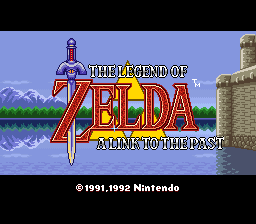
The poster, u/ohlordwhywhy, wasn't reminiscing about childhood favorites. They named Super Metroid and A Link to the Past as games they first played roughly twenty years after release: "the lack of QoL features from older games just weren't a problem at all with these two."
A first-time player in the 2010s has no cartridge nostalgia, no childhood living room, no memory to distort. The games simply worked on them. That pattern repeats across every "I finally played this classic" thread on r/patientgamers and r/nintendo — players arriving decades late and reporting the same thing: the game held up.
If nostalgia were the whole explanation, it couldn't produce this effect in people who have nothing to be nostalgic about. Something in the design itself is doing the work. You can run the experiment yourself — Super Metroid runs in any browser — and most of what modern players report noticing is not the graphics. It's the pacing.
Four Design Differences That Are Real
Games shipped finished. A cartridge had to be complete. There was no day-one patch, no roadmap promising the good parts later, no season two. You bought a thing, the thing was whole, and it ended — credits, final boss, done. That sense of an ending is something modern live-service design deliberately removes, and its absence is what a lot of players are actually describing when they say old games "felt better."
The core loop was the whole product. Limited hardware meant developers couldn't fall back on scale. A game was one strong mechanic, polished until it was satisfying to press the buttons. Modern design often stacks systems on top of that loop — crafting, skill trees, battle passes, daily logins — which adds volume but not necessarily feel. When players say an old game is "tighter," that's not memory. That's a smaller, more focused thing being easier to make excellent.
Play started immediately. Press start, understand the goal, go. Super Metroid teaches its wall jump by letting you watch animals do it. Mega Man X teaches the dash by building a pit you can't cross without it. Modern games routinely spend their first hour on tooltips, and a player coming home tired notices the difference between being taught and being trusted.
Constraints forced identity. Every SNES developer had the same resolution and the same color palette, so games had to differentiate through style — and the strong ones are instantly recognizable at a glance decades later. Modern budgets allow almost anything, which paradoxically pushes big games toward the same proven look. Distinctiveness survives time better than fidelity does; fidelity expires on a schedule.
The Fair Verdict
None of this means old games win. Modern games are dramatically better at accessibility, at difficulty options, at not wasting your evening on a level you can't clear. A 2026 player going back to Metroid Zero Mission — the 2004 GBA remake built explicitly with modern conveniences like save rooms and a real map — gets the classic loop without the classic friction, and it plays beautifully today.
The honest answer to "why do old games feel better" is: some don't, and the ones that do earned it. Nostalgia opens the door, and design decides whether you stay in the room. The classics that survived did so by being built around a loop that still feels good to press — and that's the part no amount of memory distortion can fake.
If the experiment sounds interesting, the whole Metroid series is a good lab: start with Super Metroid, no nostalgia required. Play Classic Games. No Downloads. Just Play.