Why F-Zero X Still Has the Most Raw Sound Design of Any Racing Game
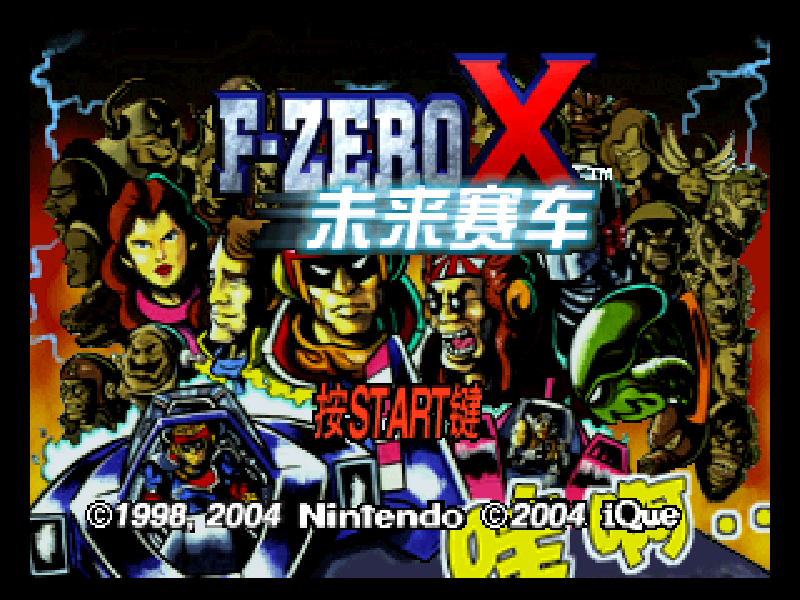
A meme post drifted to the top of r/Fzero recently with a title that needs no body text: "F-Zero X always had the most raw sound design." That's the whole post. It works because every F-Zero X player already knows exactly what it means.
Plenty of retro games have beloved soundtracks. F-Zero X is one of the few that sounds genuinely aggressive — like the audio is being pushed through equipment that's slightly too small for it. Twenty-eight years later, that aggressive mix still hits harder than most modern racers. It wasn't an accident, and the story of how it got there is a story about trade-offs nobody would sign off on today.
What "Raw" Means on a Cartridge
The Nintendo 64 had no dedicated sound chip. Unlike the SNES, whose SPC700 audio processor gave composers a stable synthesis sandbox, N64 music had to share the main CPU with everything else — and the results were usually thin. That's why so much of the console's library sounds pinched and lifeless next to its predecessor.
F-Zero X took the other path: streamed audio, essentially baked recordings rather than live-synthesized sequences. Real wailing guitars, real drums, cranked hard from the title screen to the staff roll. There was one catch. Cartridge space was brutally finite, so the streams were heavily compressed and shipped in mono. The whole game plays out of a single channel.
That constraint is exactly where the "raw" comes from. A loud, saturated, single-channel guitar mix doesn't sound polished — it sounds like it's being played in the room with you. What could have been a compromise became the identity of the game.
Two Composers, Two Homecoming Remixes
Most of the soundtrack is credited to Taro Bando and Hajime Wakai. But dig into the official track credits and two names from 1990 show up: Yumiko Kanki, who arranged Mute City's "Endless Challenge," and Naoto Ishida, who handled Big Blue's "Decide in the Eyes." Those are the composers of the original SNES tunes. The two returning classics were remixed by their own authors.
Nothing in the game gets a rest. The goal fanfare is eleven seconds of guitar. The car select music is a riff. Even the "Retire" sting sounds like a band cutting a take short in frustration.
The 60fps Deal
None of this happened in a vacuum. F-Zero X was the first racing game to run at 60 frames per second — GameSpot said so explicitly in 1998 — with up to thirty machines on screen at once. Nintendo EAD protected that frame rate above all else: texture detail was cut, trackside decoration was kept to a minimum, and yes, the audio was squeezed into mono to fit the cartridge.
Critics at the time understood the logic. The Electric Playground wrote that the frame rate made it "seem like your vehicle is bursting through the sound barrier." That's the real trick of F-Zero X's sound design: the visuals are simple, so the guitars and the engine roar do the sensory work the graphics can't. The sound is loud because the picture is quiet.
The Expansion Kit Quietly Fixed It
Here's the part most players never got to hear. On April 21, 2000, Japan received the F-Zero X Expansion Kit for the 64DD disk drive — the only expansion disk the platform ever got. It added twelve new tracks, a machine editor, and a course creator. It also added new music in stereo, something the cartridge couldn't hold.
The 64DD was a commercial failure, the kit never left Japan, and to this day the definitive stereo version of F-Zero X's soundtrack is effectively locked in a dead peripheral. Everyone else keeps playing the mono version. Most of them wouldn't trade it.
Nintendo Knew What It Had
Two albums followed the game. The F-Zero X Original Soundtrack arrived on September 18, 1998 via Pony Canyon, and the Guitar Arrange Edition — ten tracks rerecorded with even more guitar — came on January 27, 1999. Publishers don't commission arranged albums for soundtracks they're embarrassed by.
The press was split anyway. EGM praised the remixes of the old F-Zero tunes; CVG called the music dreadful. That divide never really healed, and honestly, it's part of the point. Music this loud and this unapologetic is supposed to split a room.
Hear It Today
F-Zero X joined the Nintendo Switch Online N64 catalog on March 11, 2022, with online multiplayer bolted on — the mono soundtrack intact. If you'd rather not wait on a subscription, you can play F-Zero X right in your browser, free, with no downloads. Play Classic Games. No Downloads. Just Play.
It's worth hearing where the sound came from, too: the original F-Zero on SNES supplies the two remixed classics, and the GBA sequels carried the guitar flag forward — F-Zero: GP Legend is a good next stop. The rest of the N64 library is right there when you're done. Turn the volume up first.