Metal Slug 7: The Last Mainline Metal Slug Nobody Talks About
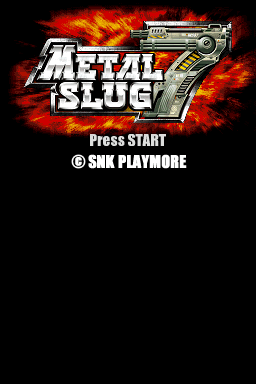
A post on r/nds earlier this year ran to three words: "Metal Slug 7 was cool." No body text, no screenshot, no argument. It's the kind of game that gets defended in a single line and then argued about for paragraphs anyway — because everyone who played it remembers it differently.
Metal Slug 7 is the last mainline entry in the series, and the only one that never existed in an arcade. That combination is why it gets forgotten, and it's also why it's worth revisiting.
The Metal Slug That Skipped the Arcade
Every Metal Slug before this one was built for a cabinet. The series started on Neo Geo hardware in 1996 and lived there through Metal Slug 6, which means the games were designed around a quarter-eating difficulty curve, a wide screen and two players standing shoulder to shoulder.
Metal Slug 7 went straight to Nintendo DS. It launched in Japan in July 2008, reached North America in November through Ignition Entertainment, and hit Europe in February 2009. Noise Factory developed it with SNK Playmore. There was never an arcade version — the first time in the main series.
That shift explains most of what people argue about.
What the DS Actually Did With It
The core is intact: seven stages, three difficulty levels, the usual parade of Slugs, prisoners to free and a boss that fills half the screen. Toshikazu Tanaka scored it, carrying on from Metal Slug 4, 5 and 3D.
The genuinely new stuff is better than its reputation. The touch screen becomes a live map of the current stage, marking prisoners and power-ups you'd otherwise run past — a real use of the second screen rather than a gimmick menu. The Thunder Shot is a new weapon that fires a homing electrical burst. Combat School, last seen in Metal Slug X, comes back with its own set of challenges and a drill instructor who has clearly given up on you. There's a Prisoner's List tracking everyone you've rescued. And three new vehicles join the roster: the Slug Truck, the rail-bound and split-cannon sort; the Slug Gigant, a walking fortress whose wave cannon swats incoming fire; and the Slug Armor, which slides and carries both a Vulcan and a cannon.
The biggest change is the cast. Six characters, and for the first time they play differently rather than just looking different. Marco gets double pistol strength. Tarma doubles vehicle durability and Vulcan ammo. Eri starts with twice the grenades and can aim her throws. Fiolina starts with the Heavy Machine Gun and picks up 50% more ammo. Ralf attacks at double melee speed, has the Vulcan Punch, and can take two hits before dying — at the cost of half the weapon and grenade supply. Clark gets an extra life on respawn and the Argentina Backbreaker, which makes him invincible mid-throw and pays out handsomely in points.
Why the Reviews Shrugged
Metacritic settled at 70. Famitsu gave it 28 out of 40. IGN landed on 7 and put the complaint plainly: once you've blasted through it in about an hour, there's almost nothing left to see. Nintendo Power called it lacking the ingenuity of the better games in the series. 1Up gave it a B−. Edge gave it a 6. Eurogamer and GameSpot were kinder at 7 and 7.5.
Three complaints repeat across all of them. It's short. It has no co-op — a strange omission for a series built on two-player cabinets. And the art, which had been authored at arcade resolution, was compressed to fit the DS screen, leaving visible tearing and pixel shift in the animation that the arcade originals never had.
The co-op one is the real wound. Metal Slug without a second player is only half the design.
The Case the Critics Missed
Engadget took the game apart in a November 2008 column and came to a different conclusion: it was a huge improvement over Metal Slug Advance, it successfully ported the arcade feel to a handheld, and the controls were tight in the specific way that 2D action games either nail or don't. The column also made a fair point about the length complaint — short campaigns were the norm for 2D action, and difficulty was supposed to be what brought you back.
There's a timing problem too. SNK had announced a PSP version around the same time, and reviewers kept bringing it up in reviews of the DS game. 1Up more or less said the 360 version looked more interesting, which is an odd thing to hold against the portable release.
It Got a Second Life as Metal Slug XX
The revised version arrived on PSP as Metal Slug XX: December 23, 2009 in Japan, February 23, 2010 in North America through Atlus USA, June 25, 2010 in Europe. It added co-op multiplayer and downloadable content, which is exactly what the DS original was criticised for missing. It later reached Xbox Live Arcade in May 2010, PS4 in May 2018 and Steam in January 2019.
Here's the kicker: XX scored 67 on PSP and 61 on Xbox 360. The version with more content reviewed worse than the one everyone called thin.
Play It Without Hunting for a Cart
Metal Slug 7 is the DS original, and yes — you can see the sprite compression the critics complained about, and yes — you'll finish a run in an hour. Do it on Hard and see how that hour feels.
Then go back and see what it was compared against: Metal Slug Advance on GBA is the handheld entry MS7 was measured against, and the gap between them is the whole argument for why this one was cool. The rest of the NDS library and the GBA library are there too. Play Classic Games. No Downloads. Just Play.
Three words was about right.