Mario Kart in VR: Why the Series Took 34 Years to Get Behind the Wheel
A developer post on r/OculusQuest this month announced something that had never existed before: Mario Kart Wii, running natively on a Meta Quest headset. "I'm happy to share the first release of Mario Kart Wiicompiled VR, available for both PC VR and standalone Meta Quest," wrote u/iChris4. His build plays in third-person or first-person, on vanilla Mario Kart Wii or the Retro Rewind mod.
It's a hobbyist project with rough edges. You supply your own PAL ISO. On Quest, the launcher extracts and compiles the game data right on the headset. And the author is upfront that it is "still a bit performance-heavy, even on Quest 3."
But it also closes a loop Nintendo opened in 1992 and never finished. Mario Kart has spent 34 years circling a single idea: putting you inside the kart. Every step toward it came from a different era of hardware — and only one of them was Nintendo's idea.
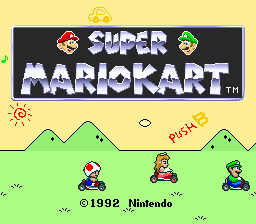
1992: Mode 7 and a Camera That Couldn't Move
Super Mario Kart ran on a trick. The SNES had no 3D hardware, so Nintendo used Mode 7: rotate and scale one flat texture and you get a racing surface. It was good enough to sell 8.76 million copies and invent an entire genre.
The camera, though, was welded in place. High behind the kart, looking down at a plane. No elevation, no free look, no way to see anything the renderer didn't want you to see. The closest thing to a driver's view was the single-player split screen — a rear-view mirror that was just a second copy of the same fixed angle.
1996: Real 3D, Still Stuck Behind the Kart
Mario Kart 64 gave the series polygon tracks. Elevation, bridges, walls and pits all arrived, along with four-player split-screen — the feature that turned it into a party staple and moved 9.87 million units, second only to Super Mario 64 on the N64.
What didn't change was where you watched from. Each player still saw their own kart from behind and above, in a quarter of the screen, at a locked 25 frames per second.
2008: The Wheel Put Your Hands on the Handlebar
Mario Kart Wii is where the series first asked your body to drive. The bundled Wii Wheel was a hollow plastic shell containing no electronics whatsoever — you slotted the Wii Remote in and steered by tilting. Bikes joined the karts, tricks fired off a flick of the wrist, and the grid grew from eight racers to twelve.
It sold roughly 37 million copies, a series record that stood for a decade. What it changed, though, was the input rather than the view: you were still watching a kart from behind. But a whole generation learned that Mario Kart answers to physical motion, and that is the mental leap VR depends on.
2011: The Series' First Official First-Person View
Mario Kart 7 quietly did the thing. On 3DS you could tilt the entire handheld to steer and race in first person, dashboard in front of you, track opening up ahead. It was the first time in the Mario Kart series, and it arrived bundled with hang gliders and underwater driving.
It stayed a novelty. Third-person went back to being the default, and stayed there.
2017: Nintendo's One and Only Official VR Kart
The single time Mario Kart officially reached VR, Nintendo didn't build it. Bandai Namco's Mario Kart Arcade GP VR opened at VR Zone Shinjuku on July 14, 2017, running on HTC Vive hardware. You sat in a moving bucket seat with a force-feedback wheel and pedals, wore trackers on both wrists, and physically grabbed items off balloons floating beside your kart.
Guinness World Records lists it as the first VR kart racing game, and it remains the only Nintendo property to officially come to VR. It had four characters and one track, stitched together from Arcade GP DX courses. You couldn't play it at home — the cabinet was the product.
2026: Players Finished the Job
Nine years on, the home version exists, and it came out of the mod scene rather than Kyoto.
The foundation is Wiicompiled, built by patchzy, the developer behind WheelWizard (the launcher for Retro Rewind). It's a static recompilation: rather than emulating a Wii, it translates Mario Kart Wii's machine code into a native PC executable. That buys you no emulation overhead, higher resolutions, and support for Retro Rewind's 200-plus custom tracks. It shipped in beta in August 2026, and it needs your own PAL copy of the game.
iChris4's VR fork puts a headset on top of that. The PC version runs smoother and supports local multiplayer — player one in VR, players two through four on the desktop screen. The Quest build is a standalone APK that extracts and compiles game data on the headset itself, which takes a while; a PC-side compiler for the Quest version is in the works.
Worth knowing what you're getting into, though. The recompilation was built with AI coding assistance, and that disclosure drew genuine pushback in emulation communities when it was announced. Quest 3 performance is still being worked on. This is a fan project, not a product.
Why This Keeps Happening to Mario Kart Wii
Mario Kart Wii is the entry players refuse to let die. Nintendo shut its online service down in May 2014; a fan-run replacement called Wiimmfi went live the next day. The CTGP Revolution mod has been adding custom tracks since 2010, and Retro Rewind now carries well over 200 of them.
That's the pattern the VR mod sits inside. Nintendo treats a Mario Kart as finished once the sequel ships. The people still racing it in 2026 disagree — and when the company stops moving the camera forward, they move it themselves.
Start Where the Camera Started
If you want to feel how far it's come, the 1992 original is the place to begin: the flat Mode 7 plane, the split-screen mirror, the fixed camera that started all of this. OldGame runs the whole handheld-era lineage in a browser tab, from the 1992 original through to Mario Kart: Super Circuit on GBA — no ISO, no headset, no compiling.