The Hero of Time Trilogy, Explained: How OoT, Majora's Mask and Twilight Princess Actually Connect
A post on r/zelda this month made an argument that's hard to shrug off. The author admitted up front that they're "normally not a fan of remake culture, especially if it takes away development time from new original projects" — and then made the case anyway: "Ocarina of Time, Majora's Mask and Twilight Princess are all canonically connected to each other both through design principles and literal story," so why not remake all three, the way Capcom did with Resident Evil and Square Enix did with Final Fantasy VII?
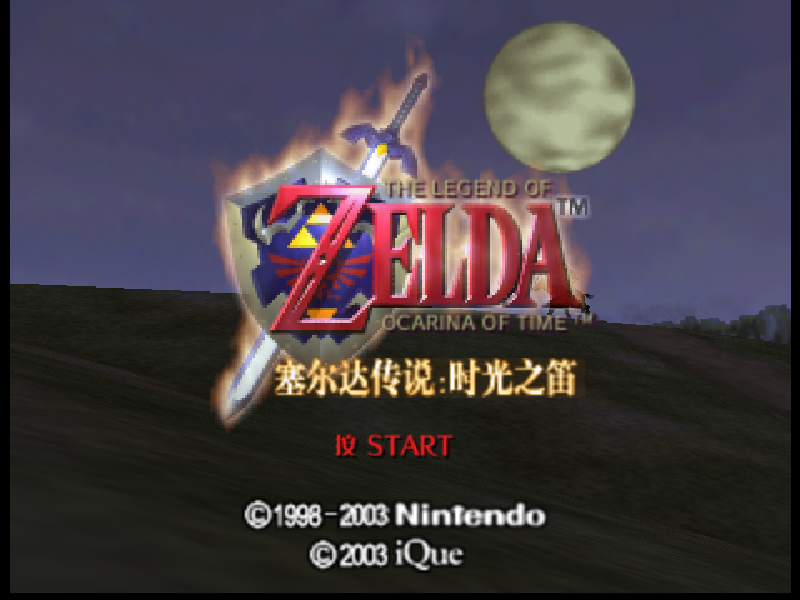
That went up before the Zelda 40th Anniversary Direct on September 8, which finally put a date on the first of them. The Ocarina of Time remake arrives November 5, 2026, exclusive to Switch 2. Producer Eiji Aonuma described it as "a faithful interpretation using modern technologies" — the same screen transitions and lock-on combat, plus a few quality-of-life additions: an on-command jump button, rolling and dashing, quick item switching, fully voiced cutscenes, and the ability to hum notes into the Switch 2's microphone to play the Ocarina in-game.
So the first third of that proposed trilogy exists. Whether the other two follow depends on something the post takes for granted: what "canonically connected" actually means here.
Ocarina of Time Is Where the Timeline Splits
Nintendo didn't publish a master timeline for twenty-five years. The first official one appeared in Hyrule Historia in 2011, and it exists because Ocarina of Time needs it: the game's ending is a fracture point.
Ocarina of Time produces three branches. A "Hero is Defeated" line runs off one way. A "Hero is Triumphant" line splits into an Adult Era (the Hyrule Link leaves behind when Zelda sends him back) and a Child Era (the Hyrule he returns to as a child, having warned the Royal Family about Ganondorf). Majora's Mask, Twilight Princess and Four Swords Adventures all sit on the Child branch — in that order, per Nintendo's own timeline.
Which means the r/zelda post is half right on structure. Those three games share a branch. They don't share a protagonist, and that's the part that decides whether "trilogy" is the right word.
Majora's Mask Is a Genuine Direct Sequel
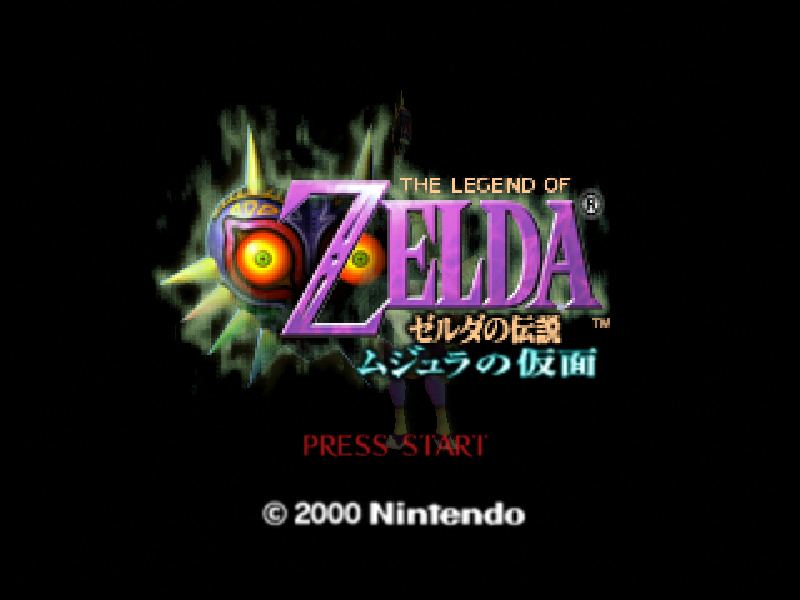
This one is not in dispute. Majora's Mask (N64, 2000) picks up the same Link, a few months after Ocarina's ending. He leaves Hyrule on Epona to search for Navi. He gets lost in a forest, the Skull Kid steals his horse and his Ocarina, and he falls into Termina — a parallel world with a moon falling on it and three days on the clock.
Mechanically, it's the only 3D Zelda built on a looping timeline. Play the Song of Time and you're back at Day 1, keeping your masks and your Bombers' Notebook while the world resets around you. Four dungeons, a shrinking-and-expanding set of transformation masks, and a schedule-based quest system that most of the series never returned to. It also shipped on a cartridge that required the N64 Expansion Pak — one of the few Nintendo first-party games that did.
That structure is why Majora's Mask keeps showing up on lists of the best game in the series and why it's the weakest remake candidate among the three.
Twilight Princess Is Generations Later, With a Different Link
Here the post's premise needs a correction. Twilight Princess (GameCube and Wii, 2006) is not the third chapter of one hero's story. It's set generations after Ocarina and Majora's Mask on the same Child Era branch, and it stars a different Link — a ranch hand from Ordon Village who gets dragged into the Twilight when Bulblins kidnap the village children.
What genuinely connects it is lineage, and it's stated in the game rather than guessed at:
- The Triforce of Courage is inherited. Twilight Princess's Link carries the Triforce of Courage because he inherited it from his ancestor, the Hero of Time.
- The Hero's Shade is the Hero of Time. The golden wolf who teaches Link the hidden sword skills is the Hero of Time himself — confirmed in Hyrule Historia, and consistent with Majora's Mask ending with the Hero of Time leaving Termina and never being seen alive again.
- The plot is a consequence of Ocarina's ending. The Sages try to execute Ganondorf, he survives on the Triforce of Power, and they banish him to the Twilight Realm. Everything Zant does follows from that failed execution.
Add the Wii U HD version from 2016, and Twilight Princess is the one entry in this trio that already has a modern restoration sitting on a shelf.
So Is It a Trilogy?
One lineage, one branch, three games — but not one continuous story.
| Ocarina of Time | Majora's Mask | Twilight Princess | |
|---|---|---|---|
| Protagonist | The Hero of Time | The same Hero of Time | A descendant, new Link |
| Continuation | — | Direct, months later | Generations later |
| Timeline branch | Splits here | Child Era | Child Era |
| Releases from | N64, 1998 | N64, 2000 | GameCube/Wii, 2006 |
That's still more connective tissue than any other three Zelda games have, which is what makes the pitch appealing. But it also means a "remake trilogy" would be three separate adaptations of three separate protagonists with three separate casts — closer in workload to the Final Fantasy VII project than to a single three-part story.
Would Nintendo Actually Do It?
The precedents are real. Capcom's Resident Evil remakes and the Final Fantasy VII Remake trilogy proved that multi-part remakes of beloved games sell. Nintendo also has an obvious studio for the job: Grezzo has handled Zelda remakes for over a decade — Ocarina of Time 3D in 2011, Majora's Mask 3D in 2015, and Echoes of Wisdom in 2024.
The current remake has been linked to Monolith Soft by rumor only. A Norwegian retailer, Elkjøp, briefly listed Monolith as the developer before editing the page; Nintendo has never confirmed it. The rumor has plausible backing — Monolith supported Skyward Sword in 2011 and worked on Breath of the Wild and Tears of the Kingdom, and Zelda general manager Daiki Iwamoto said in late 2025 that he wanted the studio to take a "central role" in the series. Monolith is also finishing Xenoblade Genesis, with a tentative 2027 window.
Two things argue against a trilogy happening soon. First, Aonuma's own framing: "faithful interpretation" is the opposite of the rework-and-expand approach that made the Resident Evil and FF7 remakes feel like new games. Second, Majora's Mask is the hardest Zelda game in the series to modernize. Its three-day cycle, its Song of Time rewind, and its save system are load-bearing — loosen any of them and the whole design collapses into a routine. Twilight Princess HD and Wind Waker HD ports are the simpler, cheaper follow-ups, and the Twilight Princess one is already the subject of unconfirmed claims from leaker Nash Weedle that a Switch 2 version based on the Wii U release is in the works. Treat all of that as rumor.
The Hero of Time's Story, Playable Today
If the remake has you wanting to replay the originals now rather than in November, the whole Child Era branch is a click away — no downloads, no emulator setup. Play Classic Games. No Downloads. Just Play.
- The Legend of Zelda: Ocarina of Time (N64) — the simplified-Chinese save-fixed build, which fixes the file corruption that plagued earlier Chinese patches.
- Ocarina of Time: Master Quest (N64) — the remixed dungeon version, with harder puzzles and mirrored layouts.
- Majora's Mask (N64) — the fan-translated simplified-Chinese release of the three-day-cycle game.
- A Link to the Past (SNES) — not the same hero, but the other side of the Ocarina ending.
The Child Era runs from the Hero of Time's last night in Hyrule to a Hyrule that remembers him as a legend. Browse the full Zelda series or jump straight into the N64 library to start at the beginning.