Which Older Games Are Still Fun Today? 6 Picks a First-Time Player Can Trust
A thread on r/gamingsuggestions asked a question that retro libraries exist to answer. The poster, u/Bersinic-Doink, was clear about the filter: "looking for some older games that are still enjoyable even by today's standards. graphics don't really matter to me as long as the gameplay is good and the game doesn't feel too outdated." Any genre, any platform, and — the hard part — worth playing for the first time, not just worth remembering.
That last condition changes everything. Plenty of old games survive on nostalgia. The ones below pass a stricter test: hand one to a player with zero history with it, and it still works. Here are six we'd put money on — with one honest caveat each, because nothing from 2001–2004 is flawless.
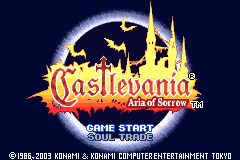
1. Castlevania: Aria of Sorrow (GBA, 2003)
The best of the three GBA Castlevanias, and the one where the series' RPG lean paid off. Every enemy in the castle can drop its soul, and every soul is a new ability — movement powers, attacks, passive boosts. The bestiary doubles as a build-your-own-moveset toolkit, and the 2035 setting gives the story somewhere fresh to go.
The caveat: it is still a gothic action game with deliberate backtracking. If "explore the castle, find the double-jump" sounds like a chore rather than a promise, no amount of soul-collecting will fix that. For everyone else, Aria of Sorrow is the strongest argument that late-2D design aged better than most early 3D did.
2. Mario & Luigi: Superstar Saga (GBA, 2003)
One button controls Mario, the other controls Luigi — and every puzzle, attack, and dodge in the game is built around operating both brothers at once. Timing a jump with A while lining up the hammer with B sounds fiddly on paper; in practice it is the most physically engaging turn-based combat the genre ever produced.
It is also, no contest, the funniest Mario game ever written. The Beanbean Kingdom's dialogue does more with a translator joke than most RPGs do with a full quest log. Caveat: ~15 hours and a prologue that takes its time. Play Superstar Saga and give it until the first boss.
3. Pokémon Emerald (GBA, 2004)
The definitive version of the third generation, and the point where Pokémon's mechanics got genuinely deep. Emerald stitches both cover legendaries into one story and adds the Battle Frontier — a post-game gauntlet of seven facilities that remains the best challenge the series has ever built, twenty-plus years on.
Caveat: it is a 2004 JRPG. Random encounters and a fair amount of walking are baked in. Emerald is the version to start with if you want gen 3 at full strength.
4. Final Fantasy Tactics Advance (GBA, 2003)
The friendliest door into turn-based tactics ever shipped. Battles take minutes, the job system invites endless tinkering, and the judge/law system — bans on certain move types each match — polarizes players to this day, but it keeps every battle reading differently.
Caveat: it is deliberately slower than an action game, and the laws can feel arbitrary early on. Lean into them instead of fighting them and FFTA becomes a tactics gateway drug.
5. Wario Land 4 (GBA, 2001)
A launch-window platformer with one brilliant structural twist: reach the end of the level, hit the switch, then escape the whole thing backwards against a timer. Every stage is designed to be played twice — once carefully, once at speed — and the layouts flip from puzzle to panic the moment that timer starts.
It is loud, deliberately ugly, and mechanically inventive in ways mainline Mario never risks. Caveat: it ends in five or six hours. Wario Land 4 earns every one of them.
6. Kirby & the Amazing Mirror (GBA, 2004)
The one Kirby game with a Metroidvania map: one giant interconnected maze instead of stages, and three AI Kirbys you can summon by phone — or replace with three actual friends over a link cable, for genuine four-player co-op in 2004. Worth knowing about even if you only borrow the idea.
Honorable Mentions
Golden Sun (puzzle-driven dungeons and the Djinn system), Fire Emblem on GBA (permadeath tactics with a story that respects it), Mega Man Zero 2 (short, hard, rewards mastery), and Advance Wars — which got a full Switch remake in 2023 if you would rather have it modern.
The Common Thread
None of these lean on graphics. All of them lean on readable design — mechanics you can parse at a glance, difficulty you can learn from, sessions that end when you decide. That is what "doesn't feel too outdated" actually means, and the GBA happened to be the last mainstream hardware built entirely around it.
Every linked game above runs in your browser. The rest of the GBA library is right there too — pick anything, no cartridge required.