Pokémon Winds and Waves and the 30-Year Release Rhythm That Got Us Here
On February 27, 2026 — exactly 30 years to the day after the original Pocket Monsters Red and Green launched in Japan — Game Freak and The Pokémon Company used a Pokémon Presents broadcast to unveil the franchise's tenth mainline generation: Pokémon Winds and Pokémon Waves. Both games are slated for 2027, exclusive to the Nintendo Switch 2, and were developed from the ground up for that hardware. The starter trio was revealed on the same stage: Grass-type Browt, Fire-type Pombon, and Water-type Gecqua.
This wasn't really a surprise. A late 2024 data breach from Game Freak's internal servers had already exposed the Winds and Waves codenames, the dual-version structure, and rough release timing. What the February presentation added was confirmation, plus the first real peek at the region — a tropical archipelago modeled on Southeast Asia (Indonesia, Malaysia, and the Philippines), peppered with islands large enough to explore and underwater areas you can actually dive into. A July 2026 leak from the same source claimed the new Pokédex will include more than 300 fresh species.
The interesting question isn't whether Winds and Waves will arrive in 2027. That's a near-certainty now. The interesting question is why this date is so obvious — and that answer comes from a release pattern Game Freak has been running for three decades.
Three Decades, Nine Generations: Pokémon Has Always Followed the Hardware
Pokémon's release cadence is one of the most disciplined in the industry. Every mainline generation has launched within roughly 3-4 years of the previous one, and almost every launch has piggybacked on a Nintendo hardware transition or peak:
- 1996 — Red & Green (Game Boy)
- 1999 — Gold & Silver (Game Boy Color)
- 2002 — Ruby & Sapphire, followed by 2004 — Emerald (Game Boy Advance) — the third generation
- 2006 — Diamond & Pearl, 2007 — Platinum (Nintendo DS)
- 2010 — Black & White, 2012 — Black 2 & White 2 (DS)
- 2013 — X & Y, 2014 — Omega Ruby & Alpha Sapphire (3DS)
- 2016 — Sun & Moon, 2017 — Ultra Sun & Ultra Moon (3DS)
- 2019 — Sword & Shield, 2021 — Brilliant Diamond & Shining Pearl (Switch)
- 2022 — Scarlet & Violet (Switch)
Two patterns jump out. First, Game Freak has never taken more than four years between mainline generations — even when Switch launched mid-generation in 2017, Sword and Shield still arrived two years later. Second, almost every generation either debuts a new Nintendo platform or lands within the first wave of big games on one. X & Y were 3DS launch window titles. Sword & Shield were Switch launch window titles. Scarlet & Violet hit the Switch's mid-late life but were treated as the system's biggest holiday release.
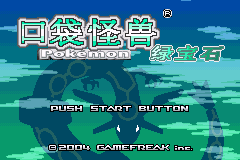
The third generation is the obvious reference point for any "tropical archipelago" speculation. Pokémon Emerald refined the Hoenn region with the Battle Frontier, the weather trio legendaries, and a story that finally wove Ruby and Sapphire's two villain teams into one plot. It's still the high-water mark for what a single enhanced version can do. Play it today in any browser and the GBA's pixel-art water animation on the title screen still feels like a postcard from a better-engineered generation: Pokémon Emerald (GBA) — Definitive Edition.
Why 2027 Is the Most Logical Year for Winds and Waves
Walk the pattern forward and 2027 stops being a guess.
- 2019 + 2022 = roughly 3 years between Switch generations.
- 2022 + 5 = 2027 = the maximum Game Freak has ever taken between mainline entries.
- 2025 saw Pokémon Legends: Z-A launch on Switch — meaning Game Freak was running a parallel production team alongside the Winds and Waves core group throughout 2024-2026.
- 2025 also saw the Nintendo Switch 2 itself launch, without a mainline Pokémon title on day one. Nintendo's first-party calendar for a new console almost always needs a Pokémon flagship within 18-24 months. The 3DS got X & Y in 2013, one year after its 2012 re-launch. The Switch got Sword & Shield in 2019, two years after its 2017 debut.
So 2027 is the convergence point: the longest Game Freak has ever taken between generations, plus the longest Nintendo has gone without a mainline Pokémon title on its newest hardware. Both clocks run out at the same time.
There's one more signal worth noting. The 30th anniversary date itself — February 27, 2026 — was almost certainly chosen because Game Freak wanted the reveal to land on a milestone, not because that's when the game was ready. That implies the actual development runway has been running for years, which is also consistent with the 2024 leak.
The Region and Gameplay Hints We've Already Gotten
Most of the Winds and Waves details confirmed so far point to a region designed around water-based traversal and tropical ecology — a clear evolution from the underwater diving teased in Pokémon Legends: Z-A into something more central.
- Setting: Tropical archipelago inspired by Southeast Asia — IGN's Michael Higham confirmed the regional influence with Filipino geography correspondents. Indonesian, Malaysian, and Filipino cultural elements are all but certain.
- Exploration: Multiple islands plus accessible underwater areas. No mainline game has made underwater a first-class exploration space before. (Pokémon Ruby and Sapphire's seafloor diving was a single dive per route; Z-A's underwater was scripted.)
- Starter Pokémon: Browt (Grass), Pombon (Fire), Gecqua (Water). The "Browt" naming convention — short, vowel-heavy, and animal-themed — fits Game Freak's tendency to pick region-appropriate starter designs (Hoenn's Treecko/Torchic/Mudkip were lizard/chick/tadpole; Alola's Rowlet/Litten/Popplio were owl/cat/sea lion).
- Pokédex size: A July 2026 leak claims 300+ new species — consistent with the franchise's slow, generation-by-generation expansion from 151 in Gen I to roughly 1,025 by Gen IX.
- Name meanings: "Winds" (Japanese: ウインド, Uindo) and "Waves" (ウエーヴ, Uēvu) explicitly frame the generation around two elemental forces — air and sea — which lines up with the tropical island setting.
What the GBA Generation's Legacy Means to the Wait
Here's the thing about waiting from 2026 to 2027 for a mainline Pokémon game: for the players who started on GBA, the wait is nothing. The third generation shipped in 2002 and 2003 — twenty-three years ago. A player who was eight years old when they first picked Treecko is thirty-one now. A player who was eight when Ruby launched is thirty-two. The whole idea that Pokémon "drags between releases" is a fairly recent framing; the early 2000s saw Ruby in 2002, FireRed and LeafGreen in 2004, Emerald in 2005, and Diamond and Pearl in 2006 — four major releases in four years.
If you're looking for something to play while you wait — and you should be — the Gen III catalogue has never been more accessible. The Game Boy Advance titles still hold up surprisingly well:
- Pokémon LeafGreen (GBA) — the Kanto remade for GBA, with the full post-game Sevii Islands arc.
- Pokémon FireRed (GBA) — LeafGreen's sibling version, the other half of the same generation's Kanto story.
- Pokémon Ruby (GBA) — where the Hoenn region starts. Pair it with Sapphire (also on oldgame.io) to complete the original third-gen story before Emerald's expanded version fills in the rest.
Wind and waves don't arrive until 2027. The wait is short. The library you can build in the meantime is enormous.